Government Shutdown Leaves TSA Agents Unpaid
By Clerfania Previlon
A partial shutdown of the U.S. Department of Homeland Security went into effect on February 14, forcing Transportation Security Administration (TSA) agents at airports nationwide to work without pay.
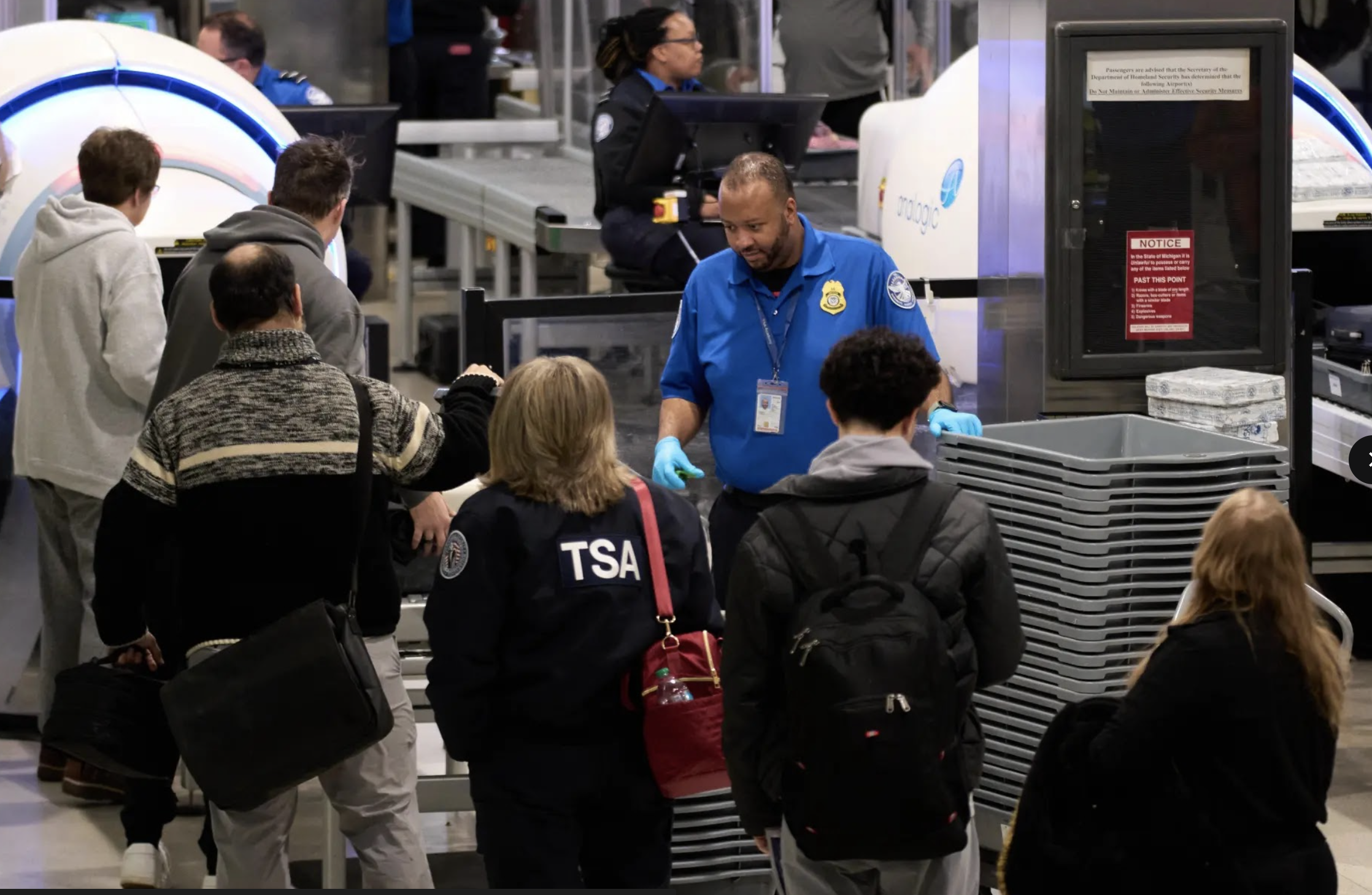
Courtesy of AP
Lawmakers struggle to reach a funding agreement, prolonging uncertainty and financial insecurity for frontline workers. This is the second shutdown in the past 6 months under the Trump Administration.
Airports have not yet experienced major disruptions, but frontline workers may miss their first paycheck in March, which is also peak travel season for college students.
“Unpaid TSA officers could possibly affect airport efficiency and flight operations with poor performance because of their current financial situation,” Nahzir Holligan, a first-year aviation management major, said. “Staffing shortages put stress on current workers and airports, which leads to security vulnerabilities; however, shutdowns like these aren’t foreign, and there are plans to handle these issues, as in the aviation world, you always need to be three steps ahead.
Nahzir shared his experience with the TSA when flying during the fall government shutdown, which he described as “mediocre to say the least.”
Azraa Morgan, a first-year marketing major, shared her experience flying home this past wellness weekend.
“I was definitely scared going home. Traveling for me and others is a necessity, and I know during a shutdown, flights get canceled. Not only that, but my heart goes out to anyone who has to work without pay to support their families. I don't think lawmakers care that when there is a shutdown, government workers work without pay…so I definitely don’t think lawmakers care about students and our spring break travel plans.”
For many Hampton students, inconsistent flight schedules will leave students without anywhere to go since the campus will be closed for spring break.
With no way of telling how long the government shutdown may last, travelers have been urged to give themselves and frontline workers extra time to complete operations to avoid missing flights.
“If this partial shutdown lasts long enough, we could see not just long security lines, but also temporarily checkpoint closures due to understaffing and the potential for delayed flights if enough passengers are still stuck in security lines," travel expert Katy Nastro told USA TODAY.