A.I. Companies Are Driving The US Economy More Than Ever. What Will Happen When The Bubble Bursts?
By Alvin H. Green IV
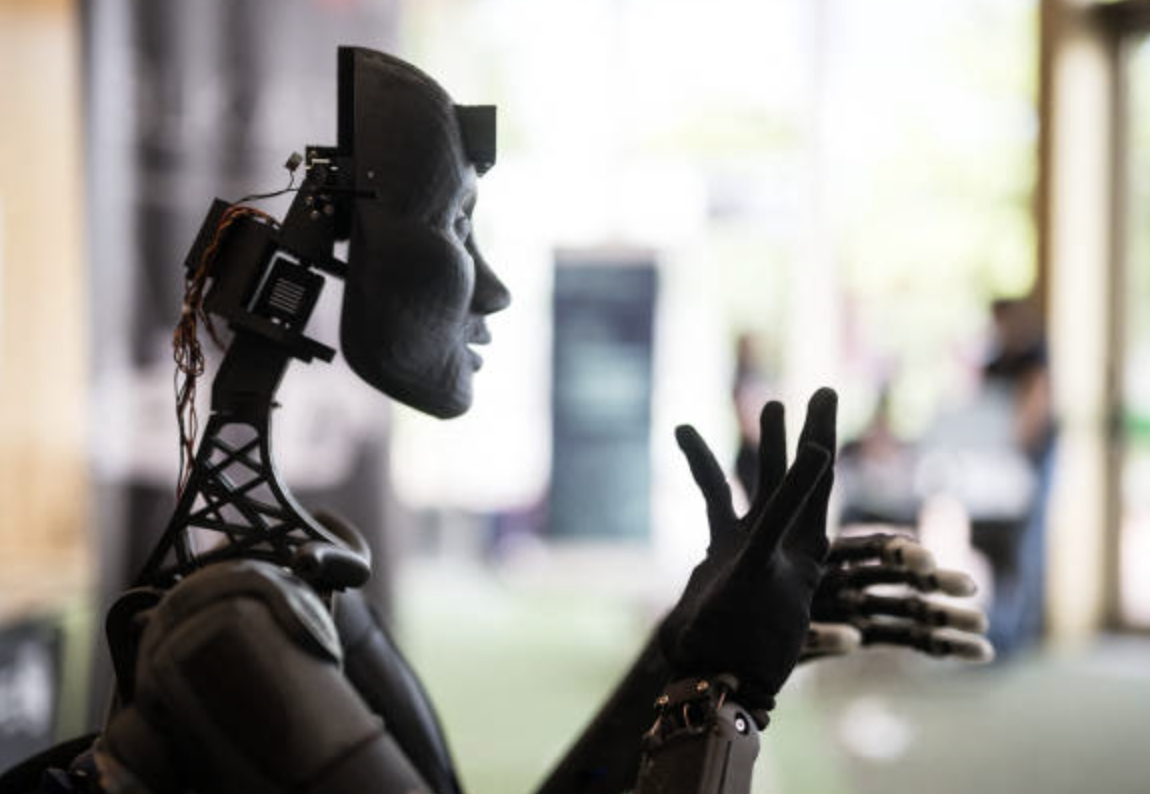
Courtesy of Getty Images
Artificial Intelligence is this decade’s latest tech trend, with some of the most wealthy and powerful people in America wanting it to become a cultural mainstay. However, experts are wondering if this path is truly what's best for both the American stock market and the American people.
A.I. development now accounts for almost one-third of the U.S.’s market value based on a report by Investopedia. Seven of the largest companies in the stock market (Alphabet, Amazon, Apple, Nvidia, Broadcom, Meta, and Microsoft) have been heavily investing in A.I. over the past few years.
The fears of a growing bubble certainly are not helped by the fact these seven companies especially have been making more investments into each other at an alarming rate. Around 80% of stock gains in 2025 were due to A.I. hype, with these seven companies earning the most.
According to The Harvard Gazette, the biggest problem with A.I. and why it might me developing into a bubble is because A.I. itself is extremely unsustainable. Both Large Language Models and Generative A.I., the two types currently driving the A.I. hype, require a large amount of arable land, clean drinking water, and rare raw materials for microchips. This widespread environmental damage will eventually lead to these resources being nearly impossible to find. The demand for both these materials and A.I. in general is so high, that it is practically impossible for these companies to make money off it. Open A.I., a newfound leader in the tech sector, is running a net deficit of around $14 Billion as of the time of writing.
$20 Trillion will be wiped out from US stock if the AI bubble bursts tomorrow, and people might already be seeing the beginning of it. Amazon lost $300 Billion off their market cap earlier this month, according to CNBC, after the company announced an increase in their spending for A.I. development and further investment into LLMs. Six other companies which have heavily invested in A.I. have also been punished by the market recently, totalling a net loss of $1 Trillion. As of the writing of this article, they still have not fully recovered.
“We’ve seen trends like this before, with the Housing bubble in 2007, and the stock trends before the Dot.Com bubble," said first-year Economics major Vincent Michaels. “The demand for AI is so high and the product is so underregulated that it is literally impossible for these [companies] to make any money. They just burn real money in the hopes of future money.”
So now that we know the threat, what can we do to stop it, or at the very least prepare for it? While there isn’t much the average person can do about this alone, unfortunately, I have come up with a list of things that might at least help us mitigate the damage.
Firstly, do your best to not support these companies. I know it can be difficult, especially since Alphabet, Apple and Microsoft are tech giants that are forcibly assimilating themselves into everyday life. But if the American people are to convince these companies A.I. is a losing bet, we have to hit them in the stock price. Boycott their products, refuse their service, and end any usage of their A.I. products (Chat GPT, Gemini, Deepseek, ect.).
Secondly, we need to let our politicians know that A.I. is not something they should support integrating into society, publicly or privately. “The more AI products are pushed onto consumers, on businesses, on the institutions that prop up society,” claims First-Year Business major Aubrey Jones, “the more it will hurt when the bubble bursts. And just know it’s not going to hurt the ones at the top …the American people will foot the bill.” Find a way to contact your Senator or Congressperson saying you don't want data centers in your town or oligarchs buying the available land.
And finally, remember that A.I. is nothing more than a trend. Do not be fooled by the slew of new startups and the concentration of ads being shoved in your face; The only difference between AI and most other trends is that this one is directly funded by silicon valley and opportunistic billionaires. AI is primarily used to give “talent” to the wealthy without giving wealth to the talented, at the cost of our energy, clean drinking water, and arable land. The longer we let the rich play with their new toy, the more it will hurt when it breaks.
We will keep you informed as this story develops.